Bageshron Font: A Premium Typeface for Your Brand’s Medieval Touch
As a small business owner, I’ve learned that every detail matters when it comes to building a strong brand identity. From your logo and packaging to your social media posts and website banners, the fonts you choose play a subtle but powerful role in how customers perceive your business. That’s why discovering the right typeface is one of the most important creative decisions you can make.
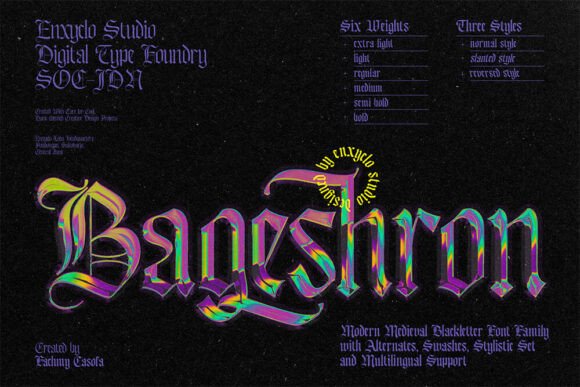
Enter Bageshron. This modern blackletter font family brings a fresh twist to an old style—perfect for entrepreneurs who want to infuse their branding with a sense of tradition, character, and visual intrigue without feeling outdated or overly ornate.
What Makes Bageshron Unique?
Bageshron blends the bold, dramatic flair of traditional blackletter fonts with clean, contemporary design elements. The result is a typeface that feels both classic and current. Its letterforms are sharp yet balanced, giving your brand a touch of elegance while maintaining a grounded, professional look.
This font isn’t just about aesthetics—it carries a mood. Blackletter fonts often evoke a sense of history, craftsmanship, and authenticity. Bageshron taps into that emotion but makes it accessible for today’s market. It works especially well for businesses in niches like artisanal goods, vintage-inspired services, and creative ventures looking to stand out.
Real-World Uses for Bageshron in Your Business
Whether you’re designing physical products or digital content, Bageshron offers flexibility and impact. Here are some practical applications where this font shines:
- Logo Design: Use Bageshron as a headline or accent in your logo for a unique and memorable brand mark. Think of a boutique or café using it in a minimalist emblem to highlight their name.
- Product Labels & Packaging: For handmade candles, wines, or specialty foods, Bageshron adds a touch of sophistication. Just be sure to test its readability at smaller sizes, especially if used on tags or labels.
- Social Media Graphics: Create eye-catching Instagram posts or Pinterest pins by pairing Bageshron with simpler sans serif or serif fonts. It draws attention and sets the tone for your brand story.
- Menus & Flyers: If you run a restaurant or event service, consider using Bageshron for headings or special promotions. It gives your menu a handcrafted feel that matches high-quality food presentation.
- Website Banners: Use it sparingly for hero headlines or call-to-action buttons. It adds personality without overwhelming your site visitors.
- Thank-You Cards & Stickers: These materials are perfect for showcasing Bageshron as an expressive, decorative font. They help reinforce your brand’s visual language in a personal way.
Building Trust and Recognition with Fonts
Font choice influences more than just how something looks—it affects how people feel about your brand. A consistent, well-chosen typeface helps build trust and recognition. When customers see the same font across your logo, packaging, and online content, they start to associate it with your business, making it easier to remember and more likely to be perceived as professional.
Bageshron allows you to create that kind of consistency. Its distinct style ensures your brand stands apart from competitors, while still appearing polished and intentional. Whether you're selling handcrafted soaps or offering coaching services, using a premium font like Bageshron elevates your materials and conveys quality.
Examples of Bageshron in Action
Let’s imagine a few scenarios where Bageshron could work wonders:
- A craft bakery might use Bageshron for their storefront sign and cupcake box labels, combining it with a soft, warm serif font to balance the medieval vibe with approachability.
- An online candle shop could feature Bageshron on product tags and promotional emails, creating a cohesive theme that suggests luxury and timelessness.
- A coaching business focused on mindfulness or leadership might use Bageshron in branded mugs or thank-you notes, adding a touch of creativity and depth to their client experience.
- A local café might use it in seasonal banners or latte art stickers, helping them maintain a nostalgic yet modern aesthetic that resonates with customers.
Each example shows how Bageshron can be adapted to different industries and formats, proving its versatility beyond just novelty uses.
Choosing the Right Role for Bageshron
Not every font should be used everywhere. Understanding where to place Bageshron within your design hierarchy is key to maintaining clarity and professionalism:
- Headline Font: Ideal for large text such as banners, posters, and email subject lines. It commands attention and creates visual interest.
- Display Font: Perfect for logos, taglines, or section headers on websites and print materials. It works best in larger sizes where legibility is less of a concern.
- Accent Font: Use it to highlight key phrases, names, or titles. Pair it with a secondary font for body copy to ensure overall readability.
- Supporting Typeface: In some cases, Bageshron can serve as a supporting element in a multi-font system—think footers, sidebars, or signature lines in printed materials.
Readability and Practicality
While Bageshron is undeniably stylish, it's also important to evaluate its usability. Blackletter fonts, by nature, can be harder to read in small sizes or at a glance. Before committing to it across all branding materials, test it in real-world conditions:
- Print it on a sample label to see how it looks up close.
- View it on a mobile screen to ensure it remains legible for web users.
- Use it in a short paragraph to gauge whether it works for extended text (spoiler alert: probably not).
If you find it too dense or intricate for certain uses, consider using it only in headlines or as part of a layered design, such as a background texture or watermark.
Font Pairing Tips for Balance
One of the biggest mistakes I’ve seen in branding is overusing a single font. While Bageshron is expressive, it needs balance to keep your designs from looking cluttered or unprofessional. Here are a few pairing ideas:
- Decorative + Clean Sans Serif: Pair Bageshron with a simple sans serif font like Montserrat or Lato for modern contrast. Great for websites and menus.
- Expressive + Readable Serif: Combine it with a classic serif font like Georgia or Garamond for a refined, elegant layout. Works well in print brochures or blog headers.
- Blackletter + Script: For a more artistic feel, pair Bageshron with a soft script font. This combination can add warmth and personality to greeting cards or custom packaging.
The goal is to let Bageshron do the heavy lifting visually while ensuring other parts of your design remain clear and easy to digest.
Commercial Use and Licensing
Before diving headfirst into using Bageshron for your branding, always check the font’s commercial licensing terms. Some fonts require additional fees for use in logos, merchandise, or digital downloads. Make sure the license supports your intended usage, especially if you plan to apply it to customer-facing assets like T-shirts, product labels, or templates you sell.
Many font sellers offer licenses tailored to specific needs—like web-only use, app integration, or print-based projects. Taking the time to understand these details will save you from potential headaches later.
Why Bageshron Belongs in Your Brand Toolkit
Fonts are more than just letters—they’re a core part of your brand identity. Choosing the right one can transform your marketing materials from generic to unforgettable. Bageshron is a great option for those seeking a blackletter font that doesn’t compromise on modern usability.
It gives your business a timeless edge, especially if you operate in niches that value heritage, craftsmanship, or storytelling. Whether you’re printing a new line of coffee bags or designing a landing page, Bageshron can help you craft a visual language that speaks directly to your audience.
So next time you’re updating your branding or creating a new design asset, consider how a font like Bageshron might elevate your message. It’s not just about looking good—it’s about being taken seriously and remembered long after the initial interaction.